Tracing the Threads of WordPress Admin Interfaces: Workflow Connections from User Profiles Through to Maintenance Routines
Written by Riley Peters · Sep 20, 2026
Tracing the Threads of WordPress Admin Interfaces: Workflow Connections from User Profiles Through to Maintenance Routines
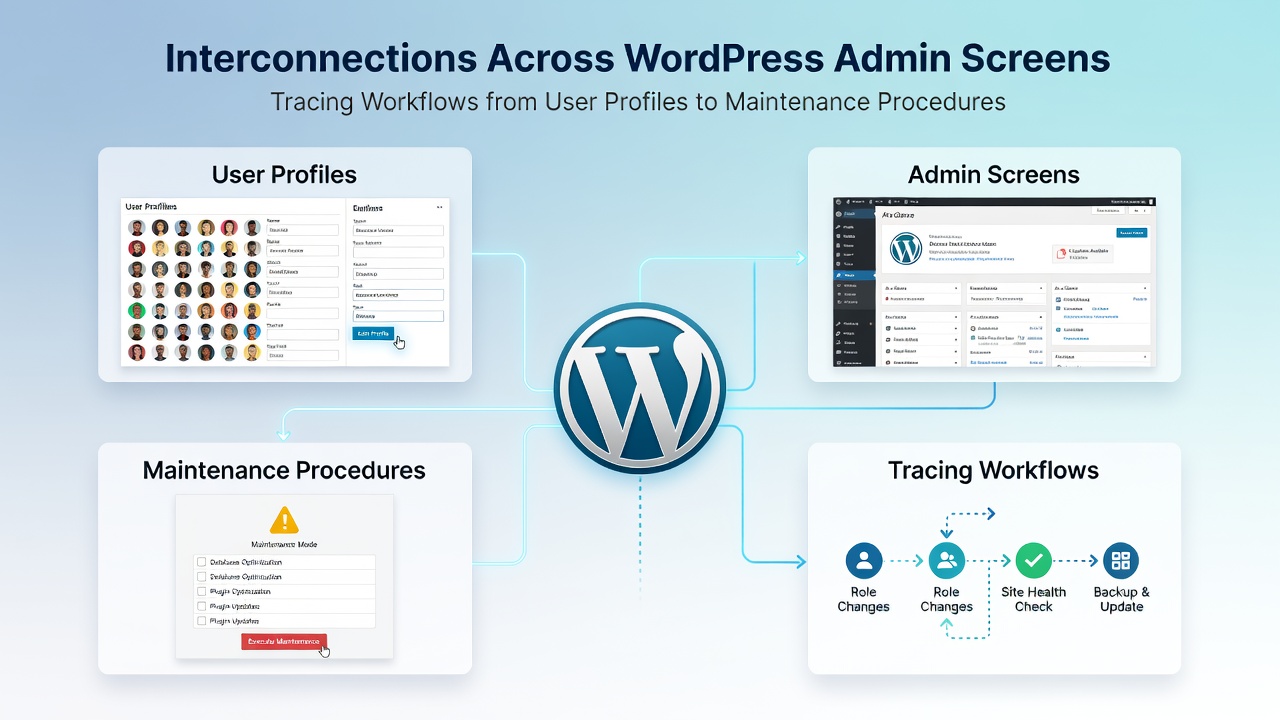
WordPress administration relies on a network of screens where actions in one area trigger changes elsewhere, and observers note that user profile management often serves as the entry point for broader system oversight. Data from the official WordPress developer resources shows that profile.php handles personal details while simultaneously setting role-based permissions that control access to update procedures later in the workflow.
Role Assignments and Permission Propagation
Administrators assign capabilities through profile screens, and those choices determine who can initiate maintenance tasks such as core updates or database optimizations. Researchers at various academic institutions have documented how a single role adjustment in the user profile section cascades into visibility settings across multiple admin areas, ensuring only authorized individuals reach maintenance interfaces. In September 2026, ongoing development cycles are expected to refine these permission checks further, according to community tracking on developer.wordpress.org.
One workflow begins when an editor updates their profile to include new contact methods, and that information then appears in notification logs tied to scheduled maintenance events. Experts have observed that such interconnections reduce duplicate data entry while maintaining audit trails that link individual actions to system-level procedures.
Settings Screens as Bridges Between Profiles and Maintenance
General options pages connect directly to profile data because user preferences influence how maintenance notifications display. For instance, email addresses stored in profiles feed into update alerts, and changes made in options-general.php alter the frequency or recipients of those messages. Industry reports from research groups in Australia and Canada indicate that sites with streamlined profile-to-settings flows experience fewer missed maintenance windows.
Yet the connections extend beyond simple data sharing. When a user modifies their profile timezone, the system recalculates cron schedules that govern automatic maintenance runs, demonstrating a practical link between personal configuration and operational timing.
Plugin and Theme Activation Tied to User Capabilities
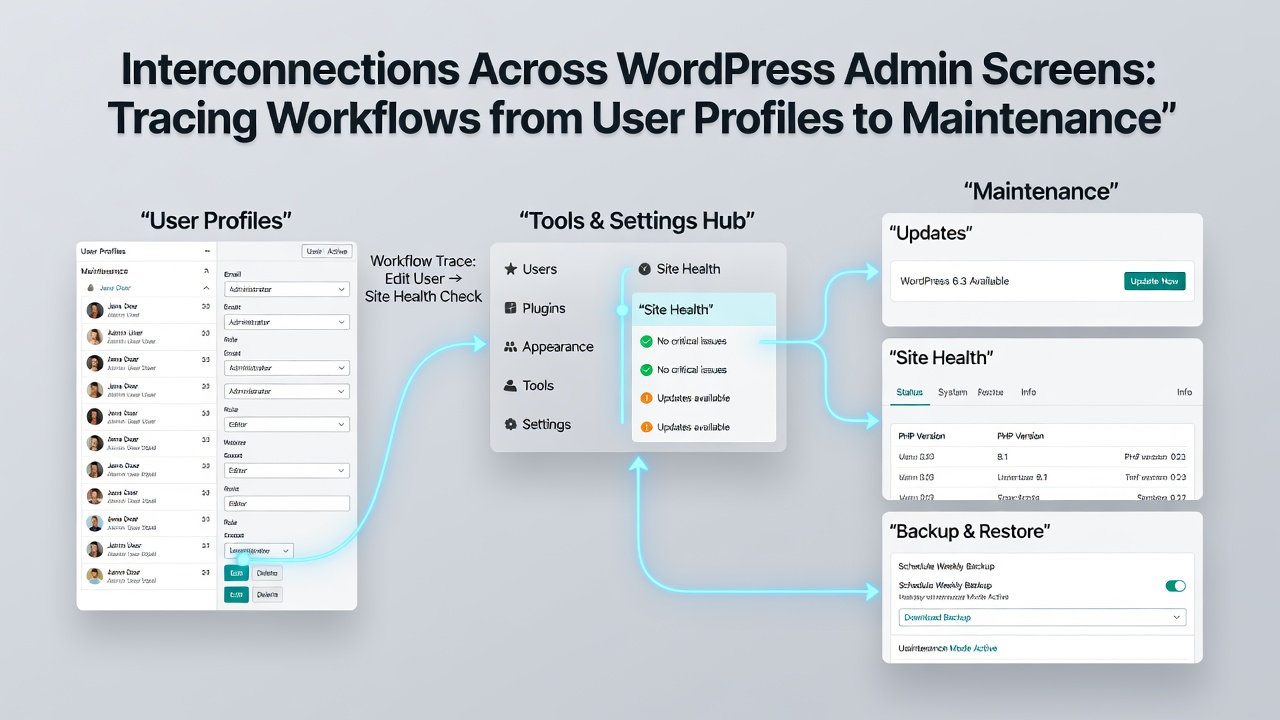
Once roles are set in profiles, administrators navigate to plugin management areas where activation decisions depend on those earlier permissions. A user granted maintenance rights through their profile can then enable tools that perform security scans or version checks, and data indicates these steps often precede visits to update-core.php. European regulatory bodies monitoring digital infrastructure have noted similar permission chains in content management systems to maintain operational integrity.
Workflows continue when theme customizations reference profile-stored author information, and those same themes later require updates through centralized maintenance screens. Observers note that this circular dependency encourages administrators to verify profile accuracy before initiating large-scale updates.
Maintenance Procedures Referencing Earlier Profile Actions
Update routines pull user capability lists established during profile creation or editing, and failed update attempts frequently trace back to insufficient permissions set at the profile level. According to developer documentation and case studies from university research teams, sites that maintain consistent profile-to-maintenance linkages report higher success rates during version upgrades. In practice, an administrator who adjusts their profile capabilities gains immediate access to maintenance tools without additional configuration steps.
Database optimization tasks, often launched from maintenance interfaces, reference user activity logs that originate in profile sections, creating a traceable path from individual settings to system health checks. This integration allows teams to correlate user profile changes with subsequent maintenance outcomes.
Conclusion
WordPress admin screens function as an interconnected system where profile management initiates permission structures that govern access to maintenance procedures. Evidence from multiple sources confirms that understanding these workflows helps administrators navigate the environment efficiently while preserving data consistency across sections. As development continues into September 2026, these linkages are projected to receive incremental refinements that further streamline the paths from user profiles to core maintenance operations.